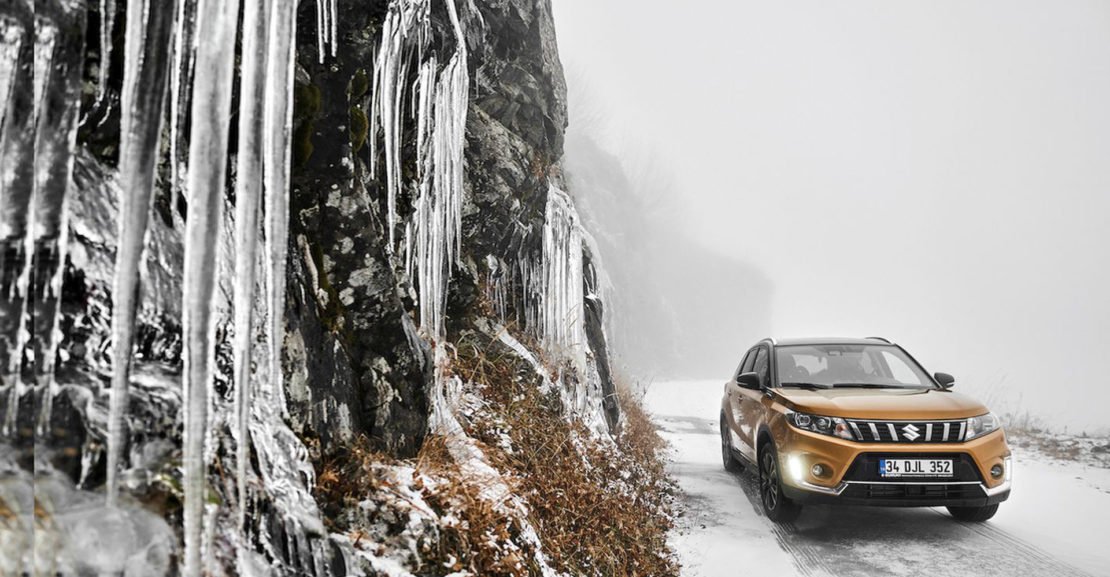
We’ve got some helpful winter driving tips here at Suzuki Fort Motors for everyone. Even if you’re a new driver or an experienced driver wanting a quick reminder, these winter safety and driving tips will help you because conditions vary by region. We’ve compiled a list of driving tips to help you safely navigate the harshest season of the year in every location.
Winter driving in Pakistan, as in other countries, is just getting started, and most regions in the North will see a lot of ice and snow on the roads for up to the next six months.
Each region has its own set of winter driving regulations, including whether or not winter tires are required, and driving in the winter is vastly different from driving in the fall, spring, or summertime.
These guidelines might help you stay safe while navigating through a chilly climate, whether you’re in the blustery states, icy locations, or moderate areas.
During the winter, driving on snowy, slippery roads is almost a given. Many drivers, however, lack the skills or understanding necessary to drive in slippery conditions. However, we’ve got you covered with a few basic but important winter driving safety and tips, beginning with how to keep your car under control when it slides in icy conditions.
So, let’s get started!
TOP 6 WINTER SAFETY AND DRIVING TIPS
When it’s snowing outdoors, it’s better to stay off the roads as much as possible. If you reside in a country where the winter weather is always blanketed in snow and ice, however, keeping off the roads is unrealistic.
Here are the top 6 winter safety and driving tips along with some key points in order to give you a safe drive.
1. EARLY CHECKS
There are some simple checks you should perform on your vehicle before taking out your car in almost all seasons.
- Fluids Check:
- Check engine oil, it must be in the best condition and in the required quantity (otherwise top it up from your Mechanic)
- Check Coolant (Known as antifreeze too), it protects from rust and helps the engine to maintain temperature during summer. And in Winter, allows the heater to throw warm air and prevents freezing water in the radiator.
- Transmission fluid (usually known as Gear oil) must be checked accordingly, it helps with keeping your transmission running smoothly.
- Make sure vehicle’s battery is charged (also check battery age and make sure cables are not loose)
- Visual Clearance:
- Check side mirrors (must not be in broken condition).
- Place rear cameras (if possible) for back (Reverse) clearance.
- Use wash liquids to wipe windscreen and window glasses.
- Check wiper blades too, replace wiper blades if necessary
- Tires:
- Ensure tires are in good condition.
- It is important to check tire pressure and condition especially in winter season on daily basis.
- If tire’s tread thickness is less than 2mm, then it is necessary to change the tires on time to prevent any mishap during driving.
- Lights:
- Make sure that your vehicle’s front lights, Rear lights and Indication lights are working properly.
- Low beams while driving because high beam causes high reflection.
- Fog light must only be used during rainy or foggy weathers.
- Fog lights provide you clear view when you are traveling.
2. WHEN IT’S SLICK, KEEP YOUR COMPOSURE AND CONTROL.
When it’s snowing or ice, don’t go hard on the brakes.
Pumping the brakes will make you stop quickly without slipping if you need to stop instantly. If your car has a modern braking system,, which is known as Anti-Lock Braking System (ABS), it will assist you in stopping in slippery circumstances by rapidly pumping the brakes.
If your vehicle has a normal transmission, decelerating through the gears instead of using the brakes can effectively slow it down. This is especially useful when you’re descending a slope. Make absolutely sure you don’t flutter the clutch when releasing it; otherwise you’ll start a skid.
When driving in snowy – winter conditions, never brake or accelerate abruptly on curvy turns. If you start sliding while braking into a turn, take your foot off the brakes and turn your steering wheel in the desired direction.
3. CLEAR YOUR CAR OF ICE AND SNOW
If you’re going for a drive while it’s windy, raining, or bitterly cold outside, make pretty sure your car is cleared so you can see out the driver’s window. Clean all of your windows, your car’s front, as well as your back-lights and headlights.
Forgetting to clean the top of your car may cause the snow or water to fall over your windscreen as you descend, and in certain regions, this is a fineable violation.
Ice might form on your car’s surface due to cold weather conditions. If it’s hard to remove ice off your windshields, deicing spray is an excellent solution for this. Pull your wipers up when you leave your car to prevent them from freezing to the windscreen.
4. MAINTAIN A SAFE DISTANCE
Other drivers who are either untrained on icy roads or do not have the proper tires mounted are a major concern when driving in the winter. Slow down as you drive. When driving in winter, keeping a safe distance between vehicles is critical because you need enough space and time to properly brake.
If you go hard on the brakes, you risk losing traction. Therefore, keep your speed down and allow other vehicles to pass you if they chose to follow or drive faster.
A SIMPLE RULE OF THUMB IS, DURING NORMAL DRIVING CONDITIONS, KEEP A DISTANCE FROM THE VEHICLE IN FRONT EQUAL TO THE DISTANCE YOU WILL COVER IN 3SEC AT A GIVEN SPEED. IN FOGGY WEATHER OR SLIPPERY ROAD CONDITIONS, INCREASE THAT DISTANCE TO THE EQUIVALENT OF 6SEC.
5. DRIVE WITH EXTREME CAUTION IN THE FREEZING RAIN.
Driving in the rain with cold weather is unavoidable in certain cities. Temperature fluctuations are common in many locations, resulting in a variety of road conditions. When there’s a lot of freezing rain, there are a lot of slick roadways and icy roads.
When driving in this type of poor weather, drivers should exercise extra caution because the risks of losing control of the car are higher, and visibility is reduced.
6. MAKE A WINTER DRIVING SAFETY PLAN AHEAD OF TIME.
In bad weather, don’t overlook how easy is to lose grip of your vehicle. Here are a few last pointers to remember as we approach to winter:
During snowy or winter conditions, your main traffic will always take the main roads to reach their desired locations. If you’re driving in the wintertime, remain on the main highways to avoid driving on unplowed or unprotected roads. This will reduce your chances of being involved in a traffic accident caused by inadequate road upkeep.
Making sure you’re visible on the road to both vehicles and pedestrians is one of the best methods to avoid accidents. Make doubly sure that your headlights are turned on and free of frost, and keep a safe space between you and other vehicles, as specified. Seeing other vehicles in your blind spot can be hard, especially during winter seasons. Keep your speed modest and your eyes vigilant for any activity on the road.
- Avoid driving in extremely poor weather.
If the weather forecast says it’s going to be a bad day, you should probably avoid getting into a car. It’s preferable to wait until the weather is okay enough to drive and you’re certain that road maintenance vehicles are back.
HOW TO HANDLE A FRONT-WHEEL SKID IN SLIPPERY CONDITIONS
When your car’s front wheels lose grip, you get a front-wheel skid, also known as understeer. If you do begin to skid, keep the following in mind:
- Don’t stress out; keep your cool. Pounding on the brakes or the accelerator will just exacerbate the situation.
- Instead of aggressively speeding or turning, just let friction on your tyres steer the vehicle without pressing the brake or gas pedals.
- Take a turn in the desired direction.
- It’s OK to accelerate once you’ve passed through an icy patch.
HOW TO HANDLE A REAR-WHEEL SKID IN SLIPPERY CONDITIONS
Oversteer occurs when your back wheels start to slide due to winter and your vehicle begins to spin. To fix a rear-wheel skid, follow these steps:
- Take it easy on the accelerator.
- With the steering wheel, turn into the slide to level out your car. It will stop the skid and return you to full control of your vehicle.
- Keep in mind that over-steering might exacerbate the situation, so keep a level mind to avoid mishaps.
THREE P’S FOR SAFE WINTER DRIVING:
- PREPARE for trip
- PROTECT yourself
- PREVENT crashes on road
KEY TIPS
Key tips for driving during bad weather in the Winter season to minimize the risk:
It is important to adjust your driving to face weather conditions. It lessens the chance of losing control of your vehicle while driving.
- Avoid risky behaviors
- Avoid quick turns
- Do not overtake until it is necessary.
- Stay in your lane.
- Keep a close eye on road conditions and traffic behavior to avoid any risk.
- Don’t use cruise controls.
- Read other drivers’ etiquette.
SNOWY OR ICY WEATHER :
- Icy road takes ten times longer to stop.
- Don’t use sudden brakes (Your vehicle may start slipping).
- Accelerate and Decelerate slowly with smooth and precise moments rather than quick and jerky motions.
RAINY WEATHER:
- Heavy rain can limit your visual sight.
- Rainy weather takes twice as long to stop as compared to dry roads.
- If you feel losing your control on your vehicle, just take your foot off from accelerator paddle and decelerate slowly.
- Use brakes cautiously.
- Use defroster to clear windows and mirrors.
FLOOD WEATHER:
- Don’t try to cross floods, if it is necessary to cross flood drive slowly especially in first gear.
- It is safe behavior to drive in the mid part of road as mid part is slightly higher than edges.
- Avoid driving near edges because near edges usually water is deep.
- When you have driven through flood water, stop somewhere and examine your vehicle, especially brakes. After brakes satisfaction you should drive at your normal speed.
- Avoid getting on the same track that is left by the others.
FOGGY WEATHER:
- Drive slowly and use parking lights + fog lights (Emergency Flashers) so others can see your vehicle.
- Observe other vehicles and maintain plenty of safe distance between front vehicles. Don’t drive too close behind other vehicles.
- Stay on the right side of the road
CONCLUSION – DRIVE CONFIDENTLY
Driving safely in winter weather can be difficult, especially in the northern region that gets a lot of snow and ice. Winter driving can be challenging for even the most experienced driver, not every driver has the same experience.
More than1.35 a million people lose their lives and more than 20-50 million people are injured (suffering non-fatal injuries as a result of disabilities) annually due to vehicle crashes worldwide.
Try to follow the above top 6 winter safety and driving tips in order to avoid accidents and drive safely in winter weather.
If you found yourself in trouble and helpless, follow these steps:
- Stay in the car unless help arrives.
- Do not leave your vehicle unless you know exact about your current location.
- To gain attention wave bright cloth and turn Parking lights on.
- When it seems that you can change your circumstances, use your time, your effort , your mind to get rid of that situation.